
Description
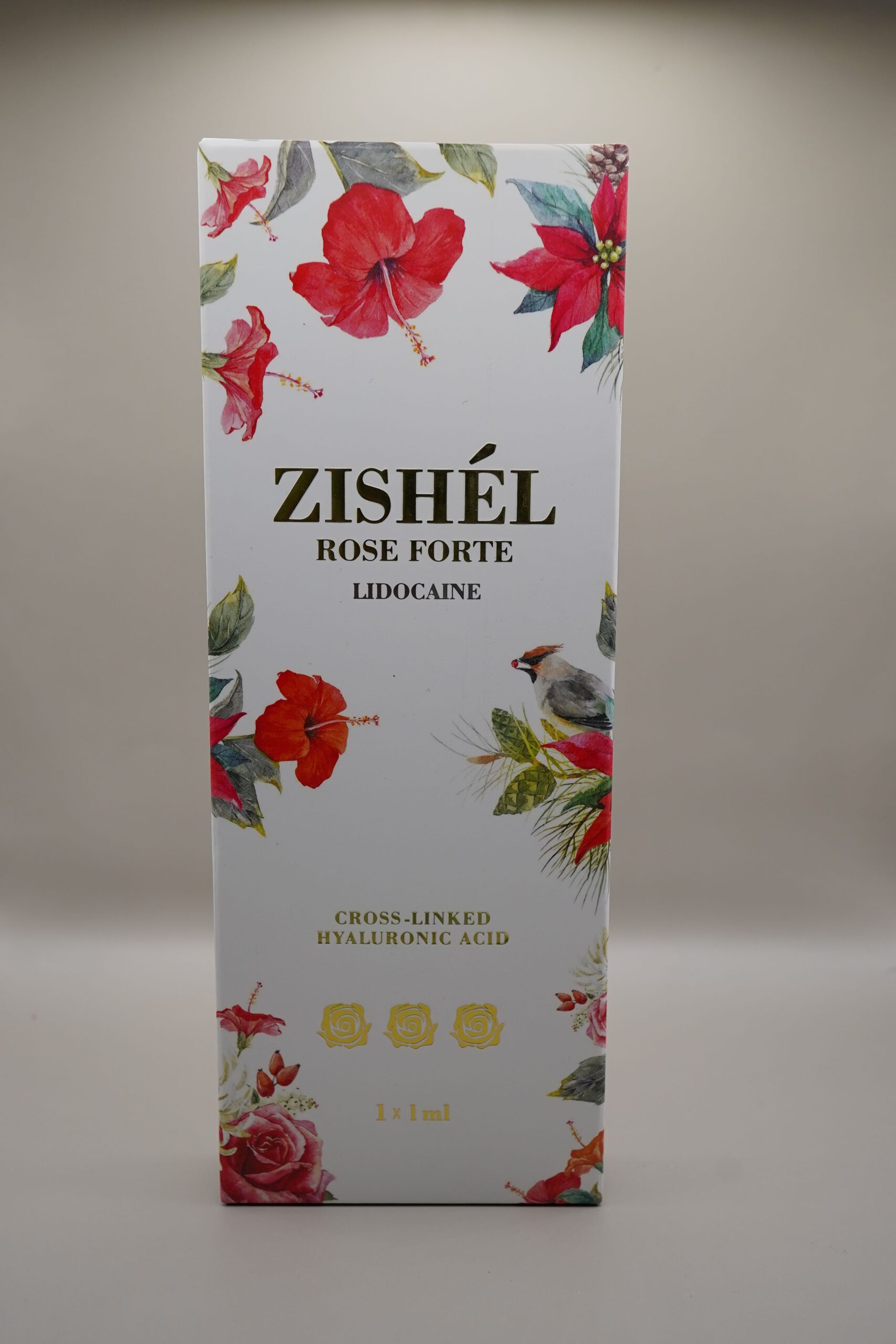
Why Choose Zishel Rose Forte 1 syringe x 1 ml?
Deep Wrinkle Correction: Possesses superior capability to fill deep “Nasolabial folds” and severe Marionette lines, restoring youthful fullness to the face.
Volumizing & Contouring: Thanks to its firm texture, it assists in defining cheekbones and projecting the chin clearly and attractively, while maintaining shape without migration.
Degradation Resistance: Zishel’s unique cross-linking technology grants this filler a long lifespan, reducing the need for frequent touch-up sessions.
Perfect Balance: Despite its lifting power, it is easily moldable immediately after injection to ensure seamless integration with natural facial features.
Key Specifications
Product Name: Zishel Rose Forte 1 syringe x 1 ml.
Packaging: 1 Pre-filled syringe (1 ml) + Sterile needles.
Active Ingredient: Cross-linked Hyaluronic Acid (20 mg/ml).
Texture: Firm and Cohesive Gel.
Injection Depth: Deep Dermis or Subcutaneous.
Origin: South Korea.
Indications
Deep Nasolabial Folds: Smile lines.
Marionette Lines: Lines extending from the mouth to the chin.
Cheek Augmentation: And lifting.
Chin Definition: And jawline (for moderate contouring).
Deep Forehead Furrows.
How to use
(For Professionals)
Assessment: Examine wrinkle depth and identify areas requiring structural support and volume.
Injection: Zishel Rose Forte 1 syringe x 1 ml is injected into the deep dermis using a needle (typically 27G) or cannula.
Molding: The physician massages the area to mold the filler and fix it in the correct position to achieve the desired sculpting.